
There Are Many Paths To The Top Of The Mountain
Updated: Jun 5
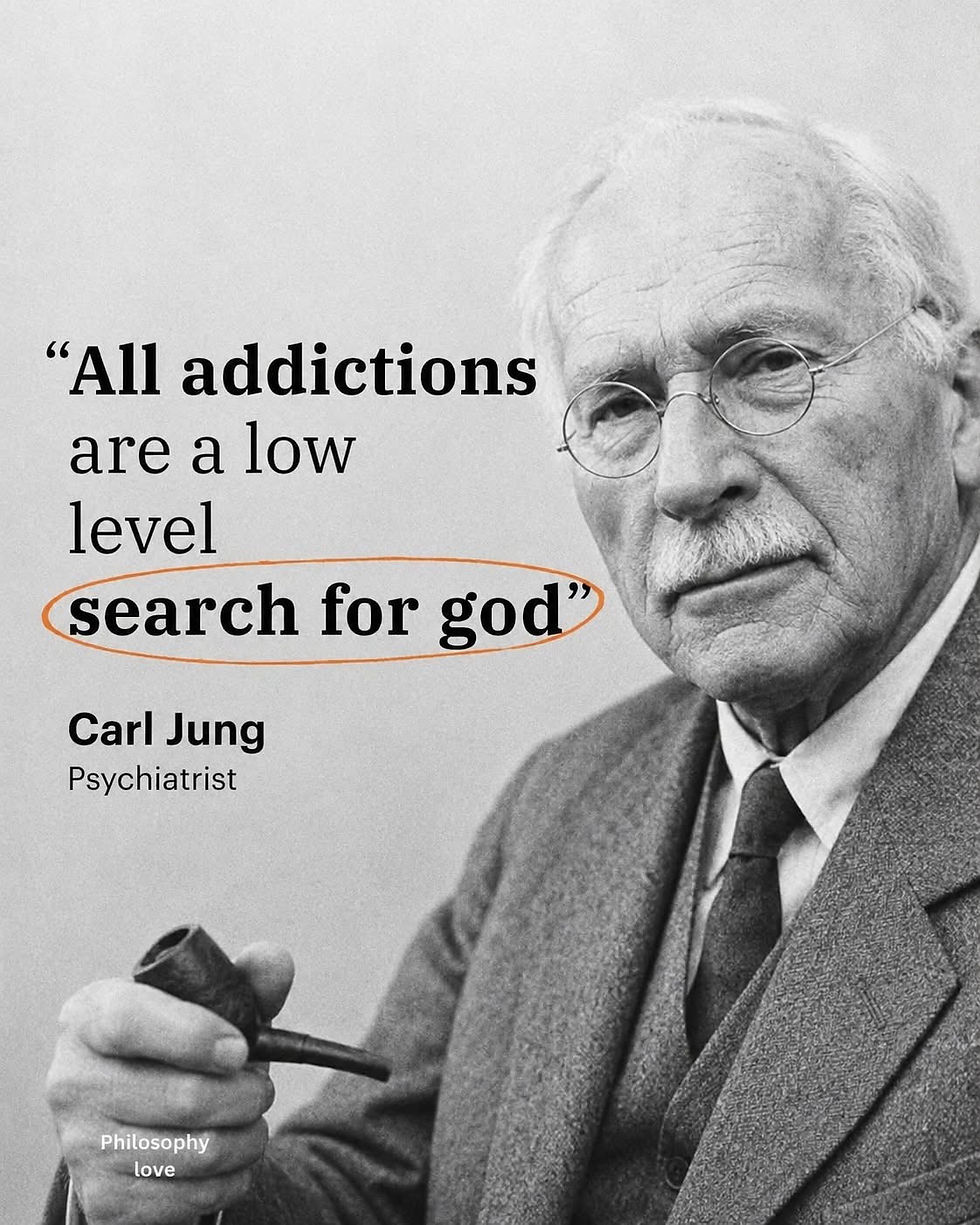
“We often treat addiction as a simple lack of willpower, but it is more accurately described as a hunger for the infinite.
Carl Jung famously noted that all addictions are a low level search for god.
Jung was the Swiss psychiatrist who broke away from Freud to explore the deeper, mystical layers of the human mind. He lived a life deeply immersed in the study of alchemy, dreams, and the collective unconscious. He believed that the human soul has a natural drive toward wholeness and transcendence. When this drive is blocked or ignored, it manifests as a desperate craving for something—anything—that offers a temporary feeling of release or connection.
In a letter to Bill Wilson, the co-founder of Alcoholics Anonymous, Jung explained that the Latin word for spirits is the same as the word for the highest religious experience. He argued that the only way to defeat a lower-level search for the divine is to replace it with a higher, more authentic one. This insight ultimately provided the spiritual foundation for modern recovery programs.”
~Philosophy Love (on Facebook)
There Are Many Paths To The Top Of The Mountain
By Amy Frank
Wow, I didn’t know that about Carl Jung and AA’s co-founder, Bill Wilson. Although I don’t think a belief in a higher power is necessary for recovery, I’m grateful I have one. My faith has been a pillar of strength in my life (and it’s certainly been tested!!) I’m grateful I have an interest in topics such as philosophy, psychology, theology, mythology, spirituality and more—an innate curiosity of not only the world around me but also of realms that not all seem to be aware of.
It’s okay if there’s nothing more to life than what I physically see, believing there is (especially now that I know the power of the mind — its ability to shape how we, as people, experience reality) has still been impactful.
Hope, belief, faith—these are not a wiggle your nose and make something instantly happen kind of magic, yet science has shown us that what we focus on we get more of. “Don’t think of an elephant” and suddenly one can’t stop thinking of an elephant. Think of red cars and now they’re all over the road. It’s not instant, and unfortunately it’s for better or worse. As I’ve learned too many times, fearful thinking can, unfortunately, become a self-fulfilling prophecy, as I would unintentionally start acting in a way that would lead to self or relational sabotage, making my fears a reality.
Just like the algorithms, I’ve learned that what I pay attention to, I get more of. I used to only listen to sad, heartbreaking music, for example (it’s what resonated). Where now I want love and joy in my life so that’s the musical vibration I choose to surround myself with.
I personally think addiction is a way to cope with pain, trauma, and emotions that one doesn’t yet know how to cope with or experience. It’s a way to numb out—a form of avoidance; or chill out, to “take the edge off”. It can also be driven by celebration or boredom (which are also emotions). How many in our society are currently addicted to caffeinated or stimulating substances just so they can go to school, work, and function?
At some points in my life looking forward to my next hit was the only thing I had left to live for—It kept me going. And I find value in hearing other people’s perspectives. “There are many paths to the top of the mountain.” I know meaning is important in people’s lives as well, as is having a sense of belonging. Personally, I think the way our world is currently set up and run is playing a massive role in all of our suffering.

Comments